See Explanation
[ "https://i.postimg.cc/0jXJDXss/case-214578-image-1-screen-shot-2020-04-01-at-6-16-45-pm.jpg" ]
Oncology
gastrointestinal malignancies
hepatic angiosarcoma
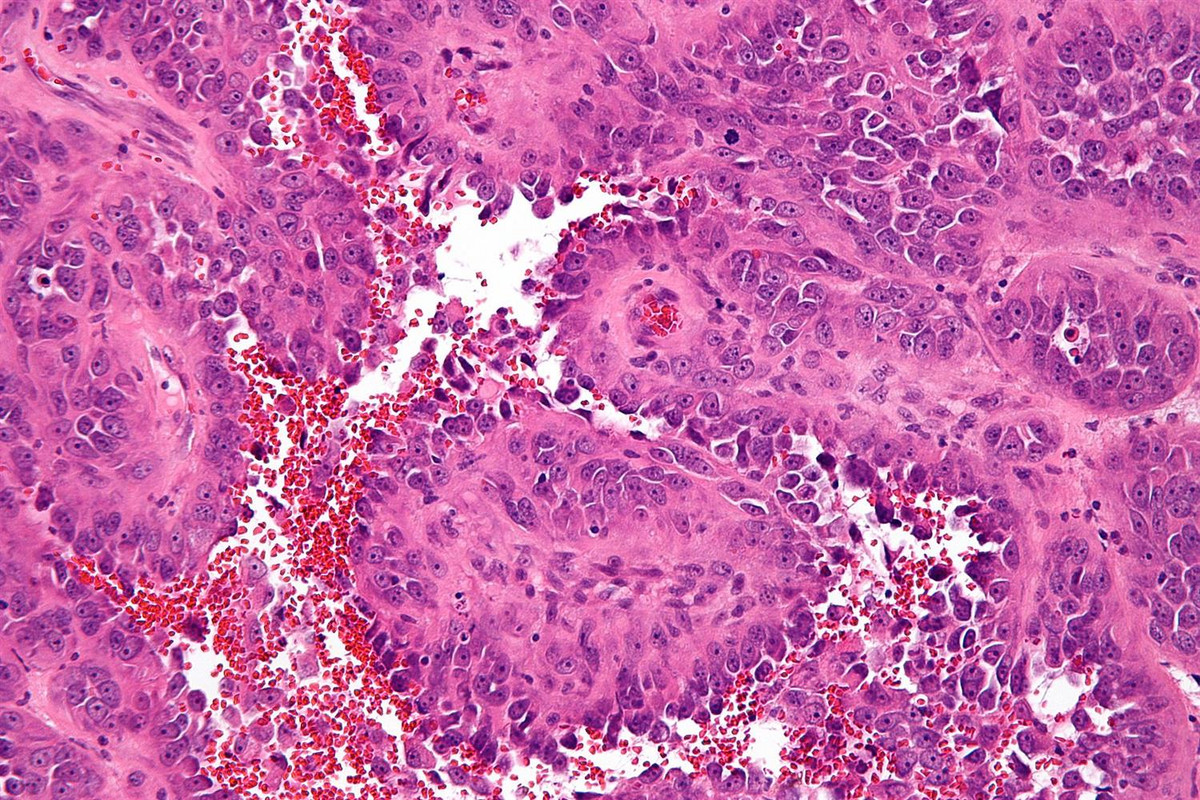
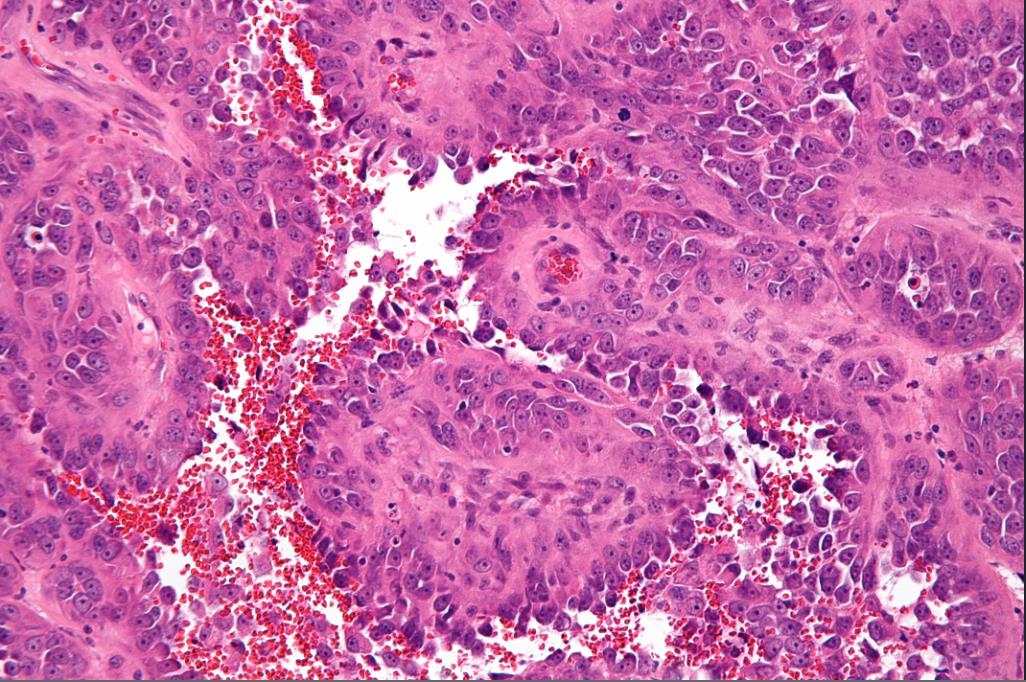
A 68-year-old man presents to an outpatient clinic complaining of progressive fatigue, generalized weakness, and a 5 kg unintentional weight loss over the last six months. He also notes a new dull, constant ache in his upper right abdomen. His medical history includes well-controlled hypertension and type 2 diabetes. He has a 30-pack-year smoking history, which he quit 5 years ago, and consumes approximately 4-5 alcoholic beverages daily. He retired last year from a long career at a chemical processing facility where he was involved in plastic pipe manufacturing. On physical examination, he appears thin and chronically ill. There is mild scleral icterus, and palpation of the right upper quadrant reveals a firm, non-tender hepatomegaly. Further imaging with contrast-enhanced computed tomography of the abdomen shows a large, heterogeneous mass involving the right lobe of the liver with areas of central necrosis. A core needle biopsy of the liver mass reveals pleomorphic spindle cells forming irregular vascular channels with atypical endothelial lining and positive immunohistochemistry for CD31. Given the clinical presentation and biopsy findings, what is the most likely diagnosis and the initial management strategy?
| Lab Parameter | Value | Reference Range |
|---|---|---|
| Hemoglobin | 115 g/L | 130-170 g/L |
| Platelets | 180 x 10^9/L | 150-450 x 10^9/L |
| Albumin | 32 g/L | 35-50 g/L |
| Total Bilirubin | 38 µmol/L | 5-21 µmol/L |
| Alkaline Phosphatase | 180 U/L | 40-120 U/L |
| AST | 55 U/L | 10-40 U/L |
| ALT | 48 U/L | 7-56 U/L |
| Alpha-fetoprotein (AFP) | 8 µg/L | <10 µg/L |
Edit question